Good Strategy to Source Potential Suppliers in the Global Market
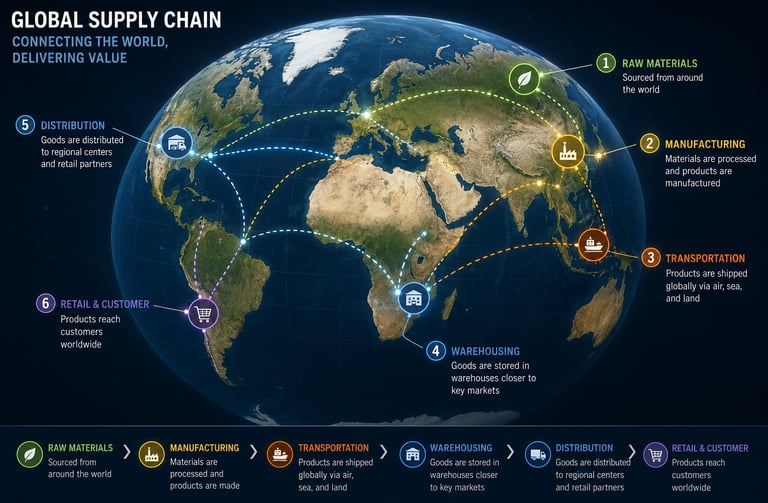
Sourcing suppliers globally requires moving away from simple "cost-chasing" toward building an intelligent, resilient supply chain. The most successful strategies balance rigorous data analysis with strategic relationship building. An effective, end-to-end framework for global sourcing breaks down into different stages depending on the internal needs and scope but the main aspects to considered could be listed as follows:
1. Total Cost of Ownership and Risk.
Look beyond the unit price. Factor in logistics, tariffs, customs duties, insurance, and the cost of carrying safety stock. Evaluate geopolitical stability, currency fluctuation trends, and local labor laws when considering a specific country of origin.
2. Diversify Options.
Relying on a single region or supplier is a massive vulnerability. Modern sourcing emphasizes strategic diversification. Supplement your primary sourcing destination with alternative hubs or even add secondary sources from different global markets.
3. Create Mutual Value.
A transactional, squeeze-them-dry negotiation style often backfires in international trade, leading to quality drops or deprioritized shipments. Negotiate not just on price, but on lead times, payment terms, flexibility in volume scaling, and shared risk management. Treat key suppliers as extension partners. Share demand forecasts early so they can optimize their own material procurement, reducing your lead times. After all if your suppliers perform well, you as a customer will be benefited as well.
4. Compliance Verification Process.
When evaluating a global supplier, compliance must be verified as well. Ensuring goods legally clear customs. This includes accurate country-of-origin documentation, tariff classifications, and adherence to trade restrictions. Sourcing regulated commodities requires strict traceability to prove your goods aren't linked to environmental degradation such as the EU Deforestation Regulation deadlines. Lastly verifying fair labor practices. Major frameworks (like the EU Corporate Sustainability Due Diligence Directive) place accountability on companies to ensure human rights are protected throughout their supply chain.
The right business partner worldwide isn't necessarily the cheapest one it's the one that aligns with all the requirements and fits well into your operational agility, quality standards, and long-term scaling needs.